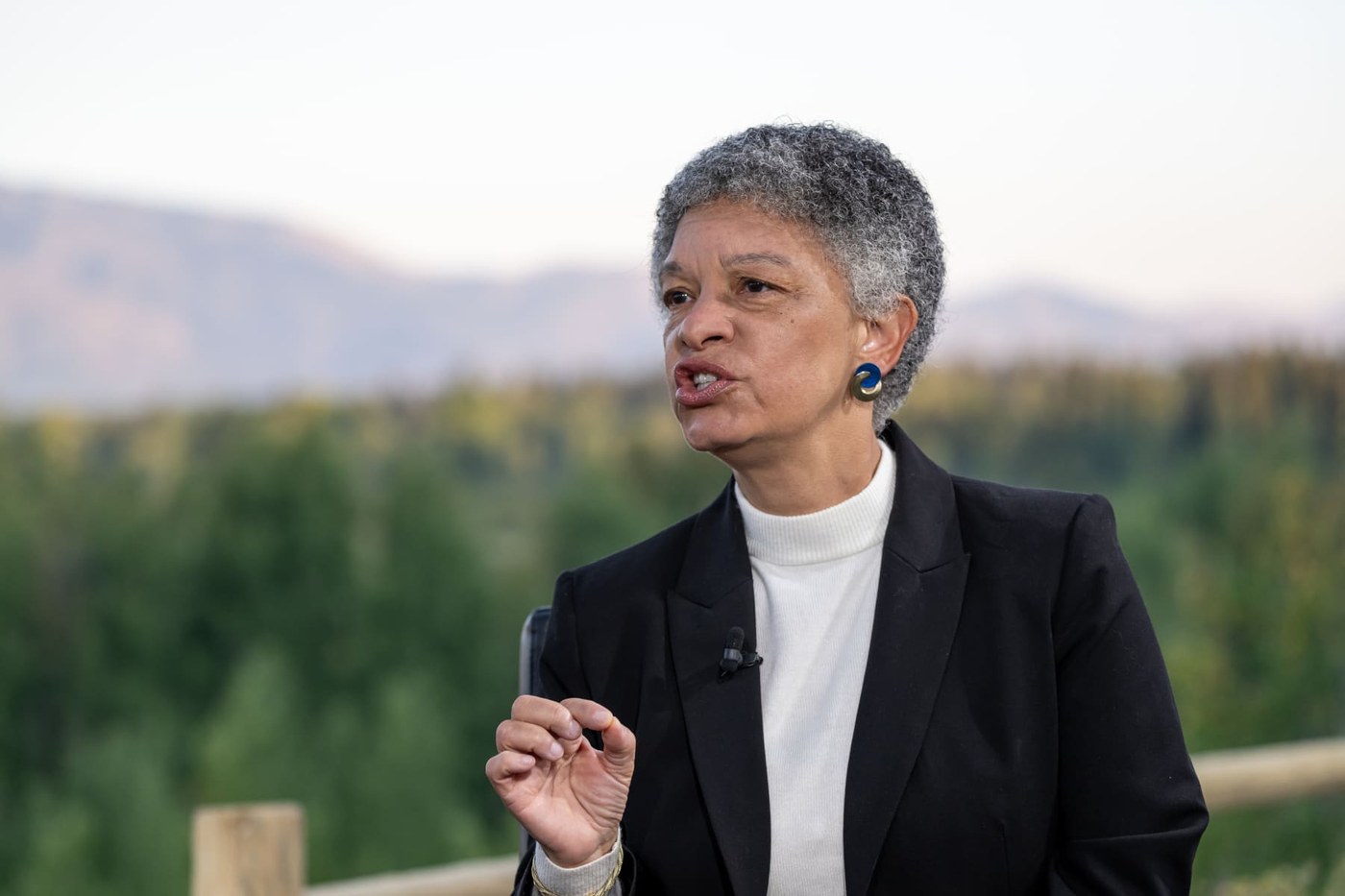
Boston Federal Reserve President Susan Collins has warned that there is "an increased likelihood" that inflation will stay "notably" above the Federal Reserve's 2% target.
Explaining her reasoning for backing the Fed's quarter-point interest rate hike last week, Collins wrote in a LinkedIn post that a "somewhat more restrictive federal funds rate will help ensure that inflation durably returns to target."
Collins takes part in FOMC meetings and helps shape the discussion, but is not currently a voting member. In 2025 — when it was the Boston Fed's turn to vote on the annual rotation — she voted with the majority at all eight FOMC meetings, backing a hold in July, and then quarter-point cuts in September, October and December.
"Given all the available information, I now see an increased likelihood of future scenarios in which inflation remains notably above 2 percent," Collins wrote.
"While the upside risks to inflation have increased, labor market conditions seem a bit stronger overall, and the unemployment rate remains low."
"With the labor market on a better footing, monetary policy can focus on a timely return to price stability, especially after five and a half years of too high inflation."
Markets are broadly split on the likelihood of another Fed rate hike at the FOMC meeting in October, with 53.1% currently expecting another 25-basis-point increase, according to CME Group's FedWatch tool.
Collin's comments chime with those of European Central Bank executive board member Philip R. Lane, who said on Tuesday that a "second wave of rising energy prices" is likely to keep inflation "higher for longer."
Lane told Swiss French-language daily newspaper Le Temps that the ECB is forecasting "upward pressure on food, energy more broadly – including electricity – and goods in general."
"If the shock does turn out to be larger and more persistent this autumn, that will hold back the [eurozone] economy," he added.
"Our baseline reflects the market view as captured in the price of oil and gas. The future curve for oil and gas basically points to a resolution later this year."
"The situation won't go back to normal, but there will be some improvement compared with the current situation. That said, there's a lot of uncertainty around that baseline."