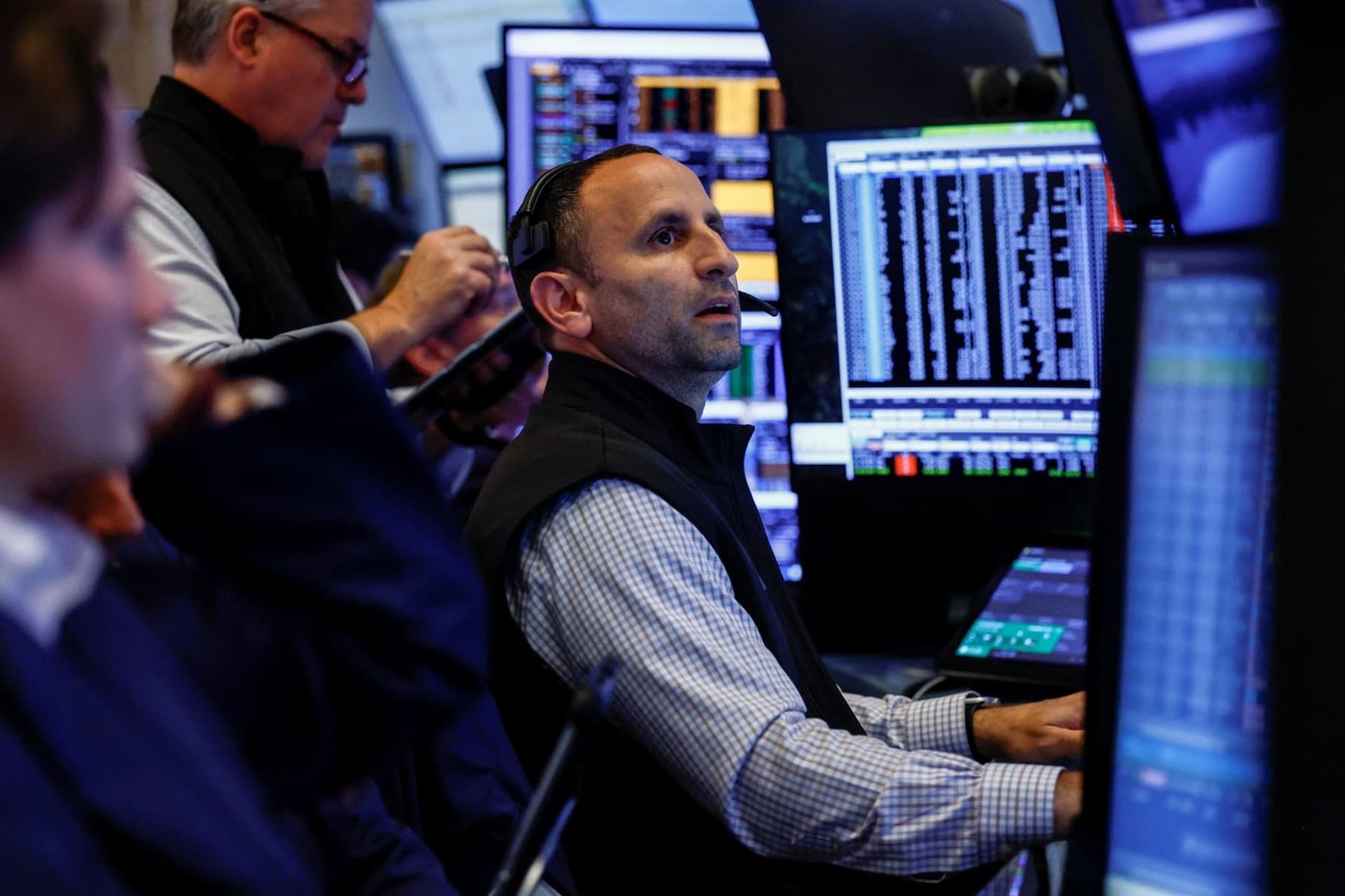
Whether it's a referendum on the midterms or just a continuation of a bear market in semiconductors that dates back to the group's peak in June, one thing's clear from the options action Thursday: few traders saw this coming.
That's evident in the surge in Cboe Volatility index (VIX), which jumped as much as 5.7 points to above 28 about 90 minutes after the opening bell on Thursday. It's the highest reading on VIX since March 31, the day after the S&P 500 bottomed after selling off as tensions between Iran, Israel and the U.S. reached fever pitch.
From its intraday low to high Thursday, VIX moved more than 11 points, the biggest one-day move since April 9. Yet with the S&P 500 down 3%, there's an argument to be made that volatility should be higher. Traders use a rule of thumb that 16 points for the VIX equate to a 1% move in the index.
The S&P 500 was headed for its worst decline since April 2025.
"My data says to de-risk, but my gut says this is a blowout that could create a dip-buying opportunity" said Noel Smith, "I do not see macro stuff causing this, like oil or rates. Those things are relatively unchanged. The tape looks like a liquidation and that's exactly what it is according to what I'm hearing with regards to a hedge fund."
Looking at Wednesday's response to the selloff in semiconductors adds a wrinkle for traders that pointed to a too-calm VIX despite Wednesday's tech-stock wreck. With the VanEck Semiconductor ETF down 3%, it was the first day in market history that the VIX concurrently fell more than 4 points, according to data from the X account "OddStats."
As of midday, nearly 800,000 calls traded on the VIX, 3.5 times higher than 30-day average, according to Cboe data.